
FAQ (Frequently asked Questions)
Gavya Ghrita – A2 Desi Cow Ghee FAQs
1. What is A2 Desi Cow Ghee?
A2 Desi Cow Ghee is ghee made from the milk of indigenous Indian cow breeds whose milk contains the A2 type of beta-casein protein.
2. What makes Gavya Ghrita different?
Gavya Ghrita focuses on sourcing milk from indigenous desi cows and maintaining quality through controlled procurement and manufacturing processes. Our aim is to provide pure, traditionally inspired ghee while supporting Indian farmers.
3. Which cows are used for Gavya Ghrita?
We source milk from indigenous/desi cow breeds. Depending on the procurement region and batch, breeds may include Gir, Sahiwal, Rathi and other indigenous breeds
4. Is Gavya Ghrita 100% pure ghee?
Yes. Gavya Ghrita is manufactured as pure cow ghee without intentionally adding vegetable oil, vanaspati or other fats. Always check the product label for the specific batch and declarations.
5. Is A2 ghee different from regular cow ghee?
The term A2 primarily refers to the type of beta-casein protein in milk, not to the ghee itself. Most of the milk proteins are removed during ghee manufacture, so marketing claims that A2 ghee has special protein-related benefits should be treated carefully.
6. How is Gavya Ghrita ghee made?
The milk is collected from farmers, quality checked and processed under controlled hygienic conditions. The cream/butter is processed to produce ghee, followed by filtration and packing.
7. Does Gavya Ghrita contain preservatives?
Pure ghee generally does not require chemical preservatives when properly manufactured, processed, packed and stored. Please refer to the product label for the exact ingredient declaration.
8. Does Gavya Ghrita contain palm oil or vanaspati?
No. Gavya Ghrita is manufactured as pure cow ghee and does not intentionally contain palm oil, vanaspati or other vegetable fats.
9. What is the colour of pure desi cow ghee?
The colour can naturally range from pale yellow to golden yellow, depending on factors such as breed, feed, season and processing. Colour alone cannot prove purity.
10. Why can the texture of ghee change?
Ghee can become liquid, semi-solid or grainy depending on temperature and crystallization. These changes are natural and do not necessarily indicate spoilage.
11. Does pure ghee become solid in winter?
Yes. Ghee naturally becomes more solid at lower temperatures and may become liquid in warmer conditions.
12. How should Gavya Ghrita be stored?
Store it in a cool, dry place away from direct sunlight and moisture. Always use a clean, dry spoon and keep the container properly closed after use.
13. Does ghee need to be refrigerated?
Usually, properly manufactured and packed ghee can be stored at room temperature. Refrigeration is generally unnecessary unless specified on the product label.
14. What is the shelf life of Gavya Ghrita?
Please follow the best-before date printed on the package. Shelf life depends on manufacturing, packaging and storage conditions.
15. Can children consume cow ghee?
Ghee can be included in a child’s diet in age-appropriate quantities. For infants or children with specific dietary concerns, consult a paediatrician.
16. Can elderly people consume ghee?
Ghee can be part of a balanced diet for many people, but individual dietary requirements differ. People with specific medical or dietary conditions should follow their healthcare professional’s advice.
17. Is A2 ghee a medicine?
No. Gavya Ghrita is a food product, not a medicine, and should not be promoted as a treatment or cure for any disease.
18. Is A2 ghee healthier than all other fats?
Ghee is energy-dense and contains a high proportion of saturated fat. Its suitability depends on the person’s overall diet and health needs. Moderation is important.
19. How can I identify genuine Gavya Ghrita?
Purchase from authorised sellers and check the original packaging, batch number, FSSAI details, manufacturing information and seal. Avoid products with damaged or tampered packaging.
20. Is Gavya Ghrita made by farmers?
Gavya Ghrita is associated with a farmer-led dairy production model, with the objective of connecting milk producers with quality-focused processing and helping create greater value from their milk.
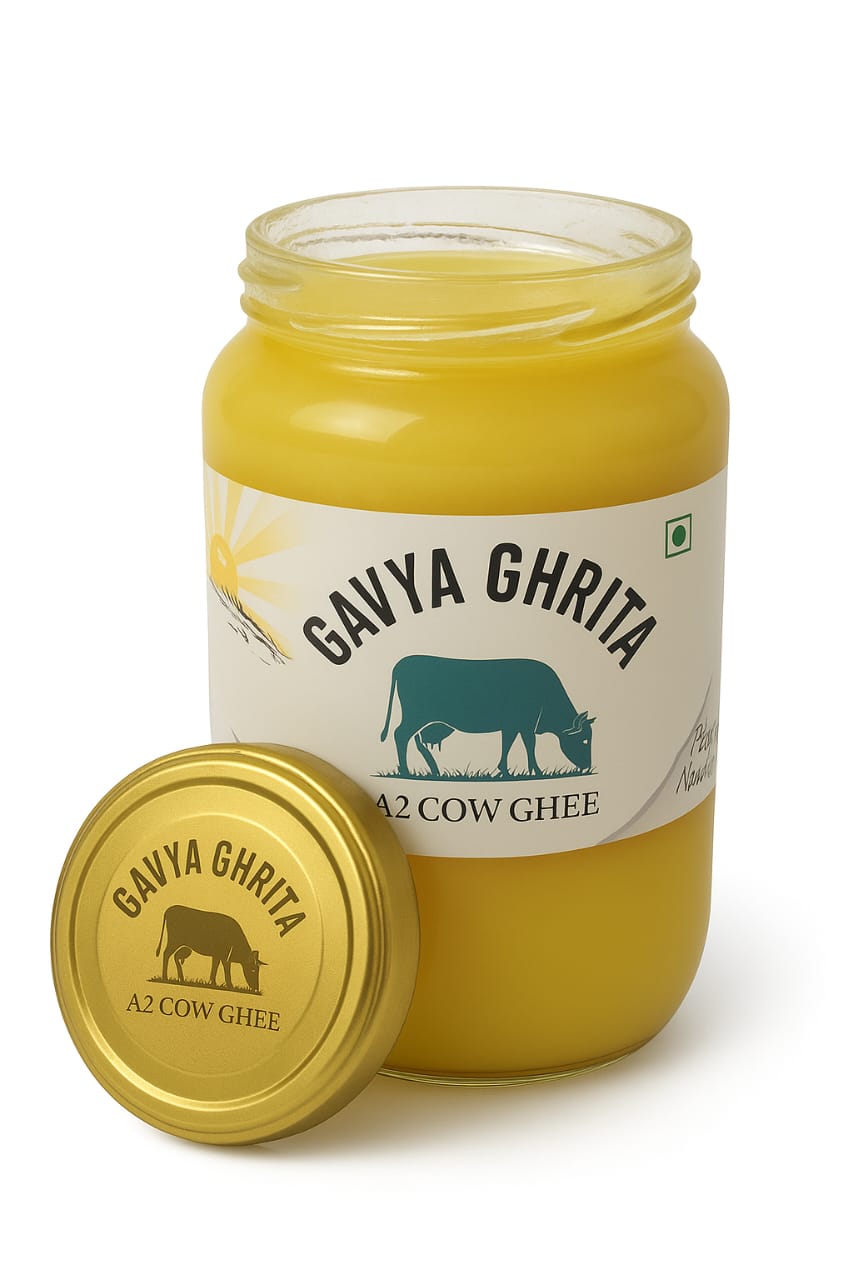
Multipurpose use of Gavya Ghrita A2 Desi Cow Ghee
A) Cooking & Religious rituals.
1) Everyday Cooking – For sautéing, tadka, curries and Indian meals.
2) Roti & Paratha – Spread over hot rotis, parathas and naan.
3) Rice & Khichdi – Adds richness and traditional flavour.
4) Sweets & Desserts – Suitable for halwa, laddoo, barfi and other traditional sweets.
5) Traditional Foods – Used in dal, khichdi, bajra preparations and other Indian dishes.
6) Traditional Beverages – Can be incorporated into certain traditional recipes and preparations.
7) Puja & Diya – Traditionally used for lighting ghee diyas.
8) Traditional Ayurvedic Preparations – Ghee has a long history of use as an ingredient/vehicle in Ayurveda; medicinal use should be guided by a qualified practitioner.
9) Baking – Can be used in selected baking recipes as a fat source.
B) Body Applications of Gavya Ghrita Ghee.
1) Skin moisturising: Traditionally applied to dry or rough skin. Apply with haldi and message will work
2) Lip care: Can be used as a natural moisturising agent for dry lips.
3) Massage: Traditionally used in oil/ghee-based body massage preparations.
4) Foot care: Applied traditionally to dry heels and rough feet.
5) Hair & scalp care: Used traditionally in some hair-care preparations, although evidence for hair-growth benefits is limited.
6) Ayurvedic preparations: Ghee is traditionally used as an ingredient/carrier (anupana) in certain Ayurvedic formulations.
7) Traditional nasal use: Nasya with medicated ghee is part of Ayurveda, but this should be done only under qualified Ayurvedic guidance.
8) Traditional wound/skin preparations: Ghee appears in some traditional formulations, but plain food-grade ghee should not be applied to open wounds or burns without medical advice.
9) Oral traditional use: Ghee is incorporated into some Ayurvedic preparations and traditional dietary practices.
10) Application in navel or belly button is one such traditional practice in which a small quantity of a2 ghee is gently applied in the navel as part of a personal self-care routine, which Improve digestives, constipation & guts over-all.
11).Kansa Vatki massage, a small quantity of pure desi cow ghee is applied to the feet and gently massaged using a Kansa bowl the toxic impurities Will drained out foot pores in black residuals form, this practice is valued as a relaxing foot-care and self-care ritual, particularly before bedtime.
Exotic Recipes with Gavya Ghrita A2 Desi Cow Ghee
1. Saffron Pistachio Ghee Rice
Ingredients: Basmati rice, Gavya Ghrita A2 Ghee, saffron, pistachios, almonds, cardamom, raisins and a little rose water.
Method: Cook the rice until fluffy. Warm Gavya Ghrita with cardamom and nuts, add saffron and gently fold in the rice. Finish with a few drops of rose water.
Taste: Aromatic, nutty and luxurious.
2. Truffle Ghee Mushroom Toast
Ingredients: Sourdough bread, mushrooms, Gavya Ghrita A2 Ghee, garlic, black pepper, parsley and a small amount of truffle oil.
Method: Sauté sliced mushrooms and garlic in ghee until golden. Season with pepper and parsley. Serve over toasted sourdough and finish with a few drops of truffle oil.
Taste: Earthy, rich and restaurant-style.
3. Ghee-Roasted Pumpkin Soup
Ingredients: Pumpkin, Gavya Ghrita A2 Ghee, onion, garlic, vegetable stock, black pepper, cinnamon and roasted pumpkin seeds.
Method: Roast pumpkin with ghee. Blend with sautéed onion, garlic and stock. Simmer with a pinch of cinnamon and pepper. Garnish with pumpkin seeds and a drizzle of ghee.
Taste: Creamy, warm and subtly sweet.
4. Rose & Saffron Ghee Laddoo
Ingredients: Besan, Gavya Ghrita A2 Ghee, powdered sugar, saffron, cardamom, rose petals and pistachios.
Method: Slowly roast besan in ghee until aromatic and golden. Add cardamom, saffron and sugar after slightly cooling. Shape into laddoos and garnish with pistachios and dried rose petals.
Taste: Regal and fragrant.
5. Ghee & Date Stuffed Medjool Bites
Ingredients: Medjool dates, Gavya Ghrita A2 Ghee, pistachios, almonds, coconut and cardamom.
Method: Make a filling from chopped nuts, coconut, cardamom and a small amount of ghee. Stuff into dates and chill.
Taste: Naturally sweet, rich and indulgent.
6. Kashmiri Saffron Ghee Kahwa
Ingredients: Green tea, saffron, cinnamon, cardamom, almonds, honey and a very small amount of Gavya Ghrita.
Method: Prepare kahwa with spices and saffron. Add crushed almonds. If desired, incorporate a tiny amount of ghee into the warm preparation and sweeten with honey.
Taste: Aromatic and warming.
7. Ghee-Roasted Sweet Potato with Chaat Spice
Ingredients: Sweet potato, Gavya Ghrita A2 Ghee, chaat masala, cumin, black pepper, lemon and coriander.
Method: Cut sweet potato into wedges and roast with ghee until caramelised. Finish with chaat masala, lemon and coriander.
Taste: Sweet, spicy and tangy.
8. Chocolate Almond Ghee Truffles
Ingredients: Dark chocolate, Gavya Ghrita A2 Ghee, almond butter, cocoa powder, roasted almonds and sea salt.
Method: Melt chocolate gently with ghee. Mix with almond butter. Chill until firm, roll into small balls and coat with cocoa and crushed almonds.
Taste: Deep chocolate with a luxurious ghee finish.
9. Ghee-Roasted Makhana with Himalayan Salt
Ingredients: Makhana, Gavya Ghrita A2 Ghee, black pepper, roasted cumin powder and Himalayan salt.
Method: Roast makhana slowly in ghee until crisp. Add cumin, pepper and salt.
Taste: Crunchy, light and addictive.
10. Fig, Walnut & Ghee Phirni
Ingredients: Rice, milk, dried figs, Gavya Ghrita A2 Ghee, cardamom, saffron, walnuts and pistachios.
Method: Cook finely ground rice with milk until creamy. Add chopped figs, saffron and cardamom. Finish with a small spoon of ghee and garnish with walnuts.
Taste: Creamy, fruity and sophisticated.
11. Ghee-Roasted Carrot & Orange Salad
Ingredients: Carrots, Gavya Ghrita A2 Ghee, fresh orange segments, walnuts, rocket leaves, lemon juice and black pepper.
Method: Roast carrots with ghee until lightly caramelised. Combine with orange segments, rocket and walnuts. Finish with lemon juice and pepper.
Taste: Sweet, citrusy and fresh.
12. Pistachio & Cardamom Ghee Granola
Ingredients: Rolled oats, Gavya Ghrita A2 Ghee, pistachios, almonds, pumpkin seeds, cardamom, cinnamon and a little honey.
Method: Mix everything and bake at a moderate temperature until golden and crisp. Cool completely before storing.
Taste: Crunchy, aromatic and premium.
13. Ghee-Roasted Cauliflower with Tahini
Ingredients: Cauliflower, Gavya Ghrita A2 Ghee, cumin, smoked paprika, tahini, lemon and coriander.
Method: Coat cauliflower florets with ghee and spices. Roast until caramelised. Drizzle with tahini-lemon dressing and garnish with coriander.
Taste: Smoky, creamy and contemporary.
14. Saffron Ghee Pears
Ingredients: Pears, Gavya Ghrita A2 Ghee, saffron, cinnamon, cardamom, honey and crushed pistachios.
Method: Halve pears and gently roast them in ghee with cinnamon and cardamom. Add saffron and a little honey near the end. Serve warm with pistachios.
Taste: Elegant, fragrant and naturally sweet.
15. Royal Ghee Millet Bowl
Ingredients: Cooked millet, Gavya Ghrita A2 Ghee, roasted vegetables, pomegranate seeds, pistachios, mint and saffron.
Method: Toss warm millet with a small amount of ghee. Add roasted vegetables, pomegranate, pistachios and mint. Finish with saffron and freshly ground pepper.
Taste: Colourful, wholesome and premium.